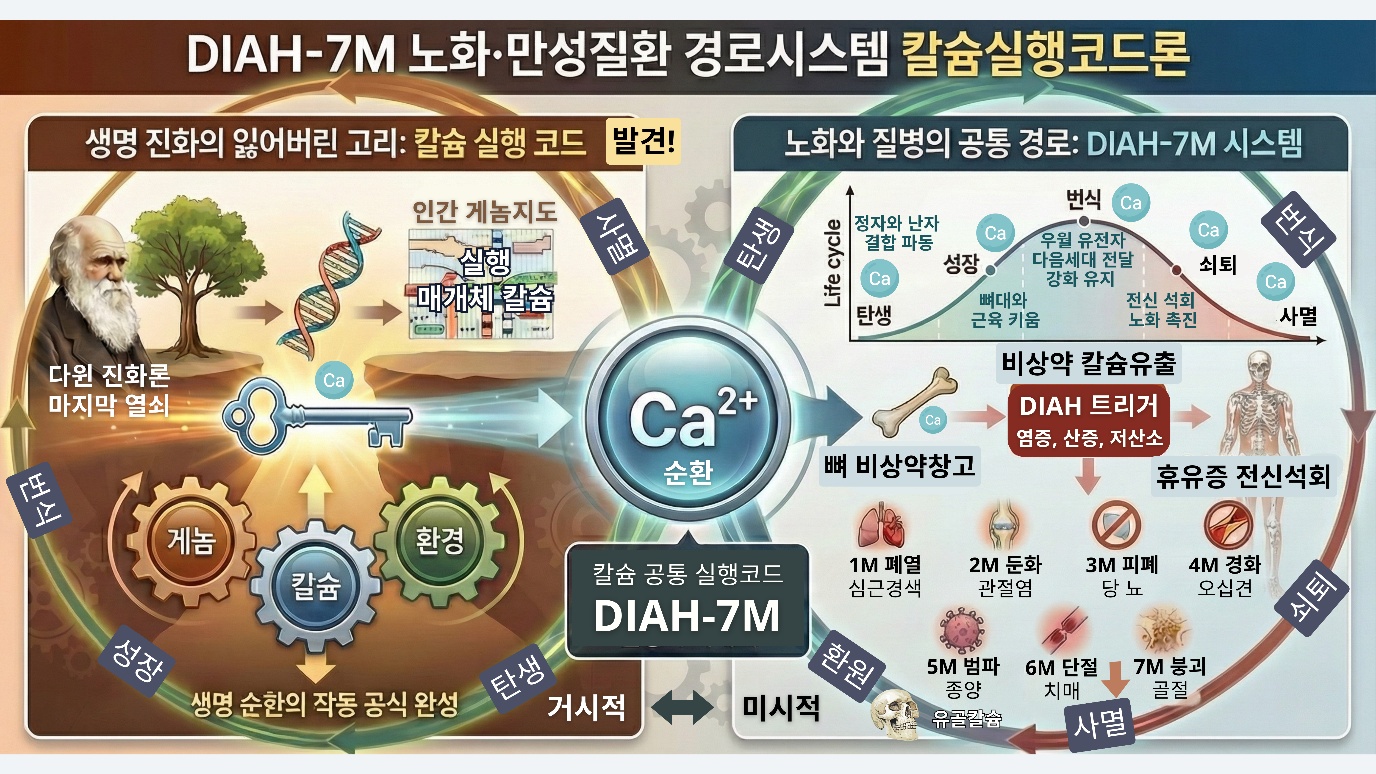
This piece is the complete prologue of Calcium: The Reality of Evolution That Darwin and the Genome Map Missed (Yoon Jong-won). The body, figures, and citations follow the manuscript as written, and the subheadings are the subheadings found within the original.
Prologue
At forty-seven I lost three teeth to chronic stress. Before I turned fifty the dizziness began, followed by sympathetic overactivity and depressive symptoms. The diagnoses I collected as I went from hospital to hospital were many: periodontal disease, benign paroxysmal positional vertigo, autonomic dysfunction, urinary stones, hypertension and prediabetes. Each diagnosis was accurate, yet no physician could explain why these had all come to one person together. That was when I first held a strange question. Are these truly different diseases, or is a single flow appearing in several organs under different names?
This book began from that question. And after years of inquiry I arrived at one answer. The name of that answer is the DIAH-7M Aging and Chronic Disease Pathway System, the Calcium Execution Code theory. It is an integrated theory that explains, by a single principle, how life works and how that working breaks down into disease.
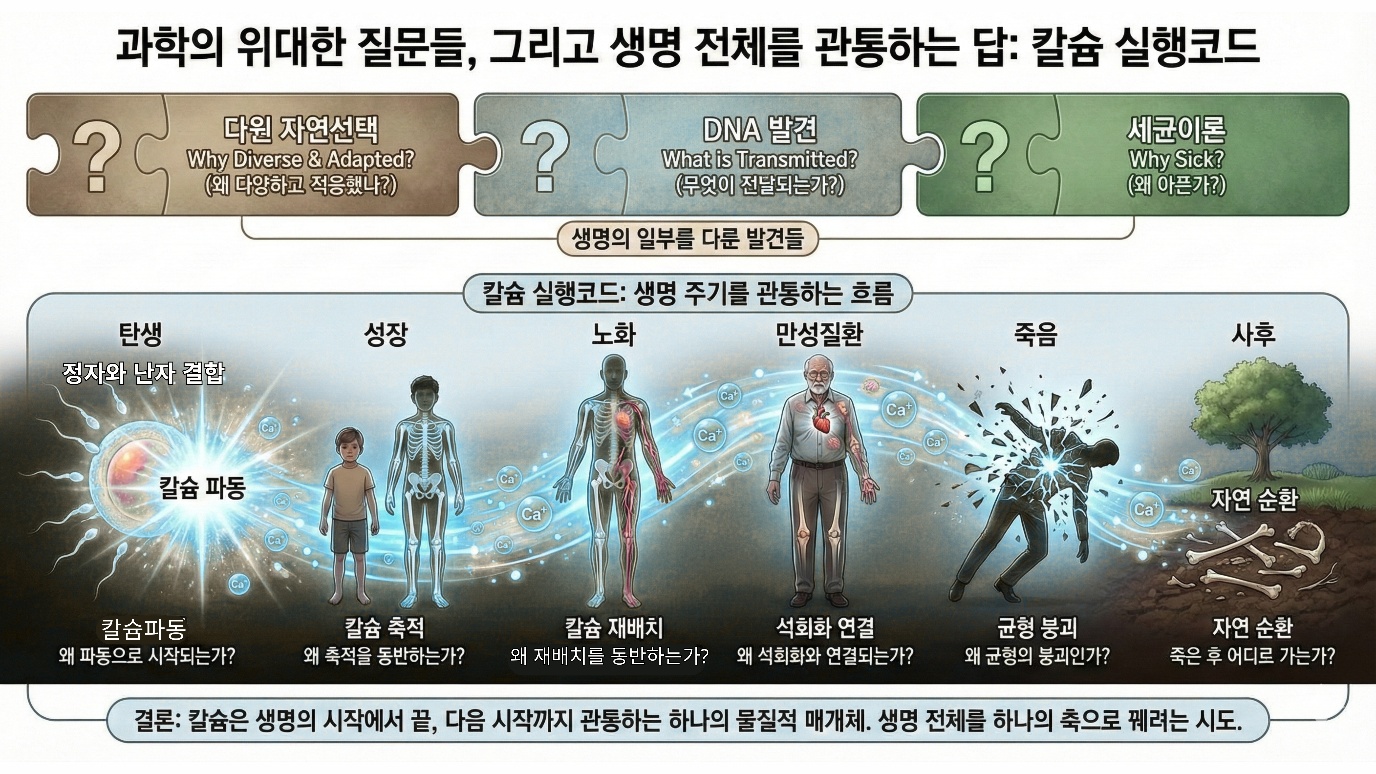
To explain this theory, I want to begin with two windows: the great cosmos and the small cosmos. The great cosmos is not a tale of distant stars but the time of birth and death, evolution and cycle, that life has repeated for 3.8 billion years. The small cosmos is the biochemical reactions that unfold every moment in the 37 trillion cells of our body, and the arena of health and disease they produce. DIAH-7M is the single principle that runs through both of these cosmoses.
Macroscopic Integration: The Calcium Execution Code Theory
Let us begin with the great cosmos, the macroscopic dimension. Life is always shuttling between assembly and disassembly. Birth is the event in which a single fertilized egg divides again and again and is assembled into a complex structure; growth is the process in which that structure expands until bone and muscle and organs are complete; reproduction is the technology of copying that design, in the form of DNA, into the next generation. Aging and death are the road on which that structure is damaged and disassembled, and return is the cycle in which the calcium of the skeletal remains and the disassembled elements go back to soil and sea to become the material of the next life once more.
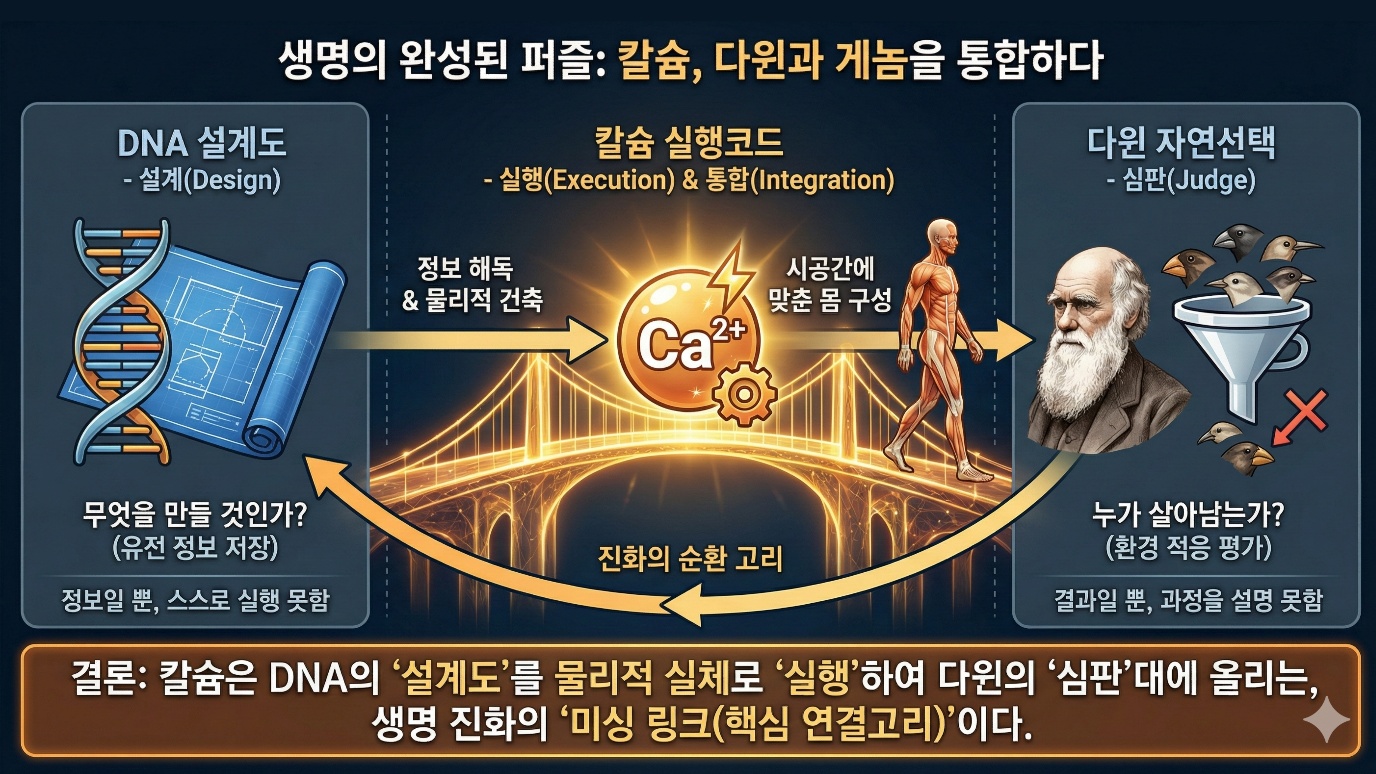
To understand this immense flow of time, humanity created two great tools. One is Darwin's theory of evolution, which explained why life had to change through the principle of natural selection. The other is the Human Genome Project, which decoded what life is born with, as a blueprint of 3 billion base pairs. But between these two achievements a gap remained. Having a blueprint does not make the heart beat on its own, and having natural selection does not make a cell divide on its own. From the genetic design to the actual working body that stands before its environment, what is the substance that mediates that "How"? This is the core question of the macroscopic dimension.
The Calcium Execution Code theory fills that empty place with "calcium." Why calcium of all things? Our body has many ions involved in signaling, such as sodium, potassium, and magnesium. But calcium has unique properties that only it possesses. First, calcium's concentration difference between the inside and outside of the cell reaches ten thousand-fold. The calcium concentration outside the cell is about 1.2mM, while inside the cell it is only 100nM. Thanks to this extreme concentration gradient, the moment a gate opens calcium rushes in sharply and can act as an instantaneous signal. Sodium and potassium have concentration differences of only 10 to 30-fold, which makes such explosive signaling impossible. Second, calcium is removed immediately after it sends its signal. The cell spends ATP to pump calcium back out of the cell or into the endoplasmic reticulum, and thanks to this a signal can be switched cleanly on and off. Third, calcium is a structural material and a signaling substance at the same time. It is stored in the bones in amounts exceeding 1 kg and is released into the blood when needed, so the body solves both structural maintenance and signal transmission with the single substance calcium. Evolution selected this efficient dual function.
That is why calcium appears at every decisive moment of life. At the moment of fertilization when sperm meets egg, calcium rushes into the egg and the switch of cell division is turned on. At every beat of the heart, calcium must enter the cardiac muscle cells for contraction to occur. When a thought is formed in the brain, calcium must move to the synaptic terminal for neurotransmitters to be released. When insulin is secreted from the pancreas, when a muscle moves, when an immune cell attacks a pathogen, and even in apoptosis where a cell kills itself, a change in calcium concentration acts as the trigger in every decisive event. If genes hold the information of "what to make," calcium transmits the signal of "execute now." In biochemistry this is called a "second messenger." I call it the "calcium execution code." If the genome is blueprint software, calcium is the execution command that actually runs that software.
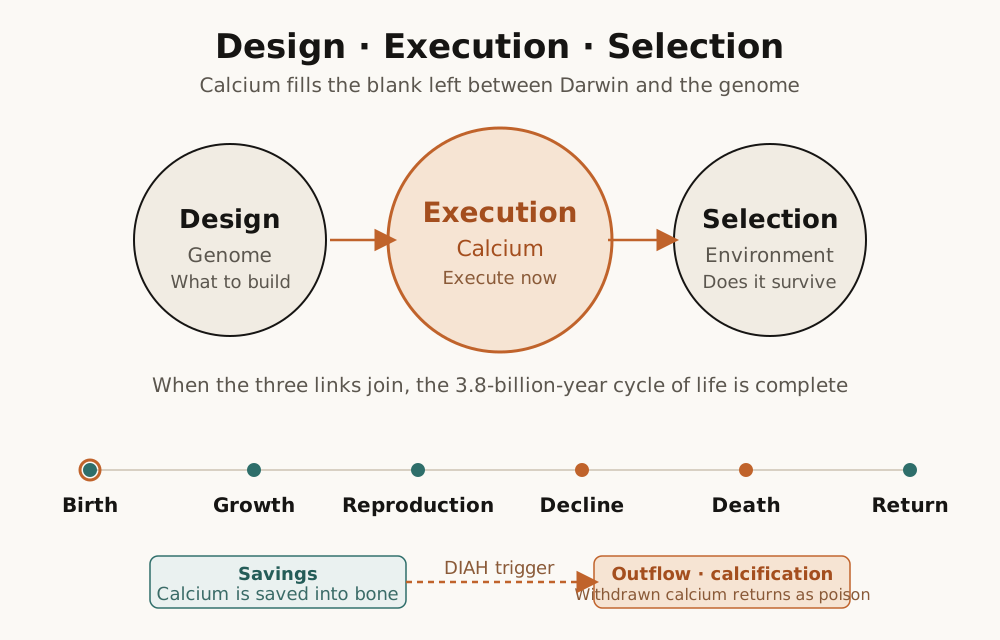
Now we can integrate Darwin and the genome into a single sentence. The design of the genome becomes an actual working body through the calcium execution code, and that body proceeds through the time of evolution as it meets the selection of its environment. Design (genome), execution (calcium), and selection (environment): when these three loops are connected, the cycle of life is completed. This is the operating principle of life that the DIAH-7M Calcium Execution Code theory reveals in the great cosmos.
Microscopic Integration: The Aging and Chronic Disease Pathway System
Next let us look at the small cosmos, the microscopic dimension. We must first point to the problem that modern medicine faces. Over the twentieth century medicine achieved astonishing progress as it differentiated by organ and by disease. Cardiology dug deep into the coronary arteries, neurology into the brain, endocrinology into hormones, and orthopedics into bone.
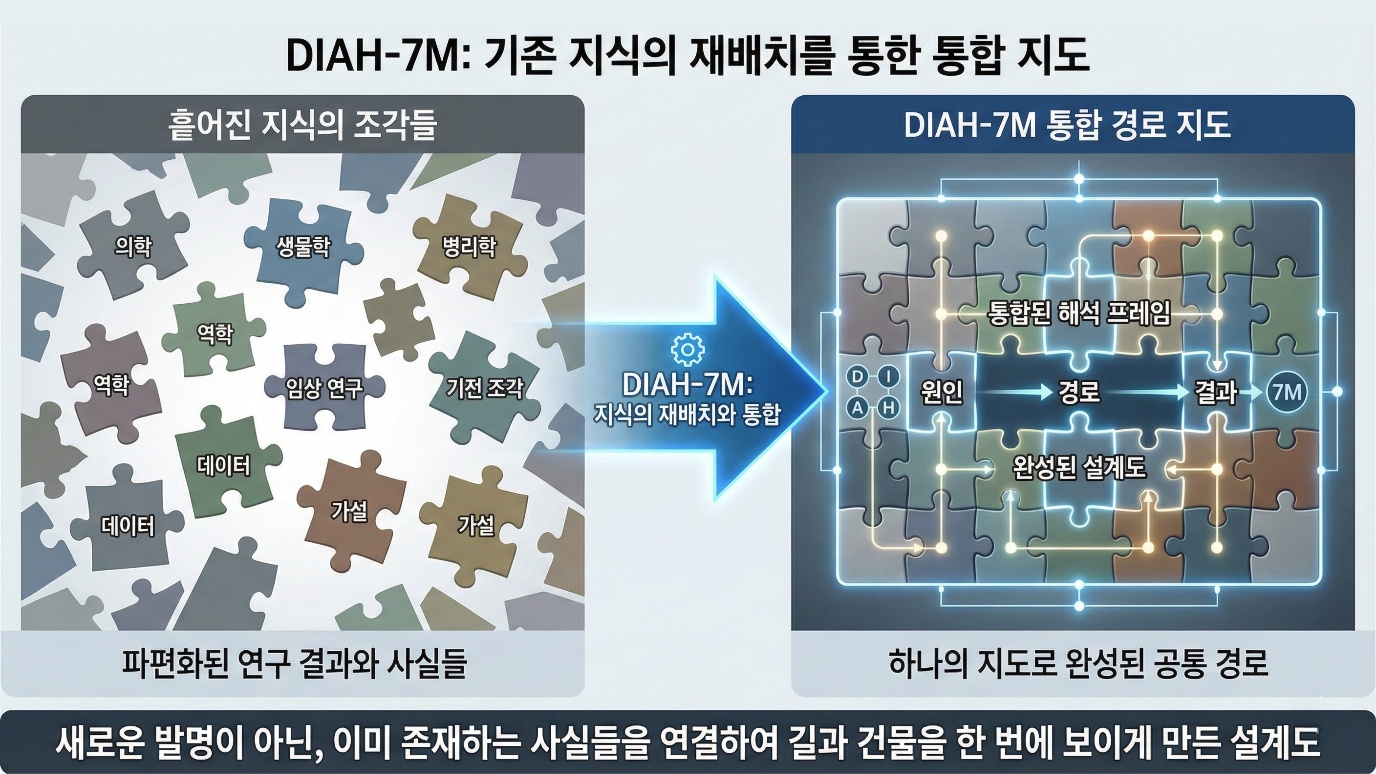
But this differentiation exacted a price. When a single patient suffers from hypertension, diabetes, osteoporosis, and arteriosclerosis all at once, each department sees only the disease of its own domain. The patient receives four diagnoses and ten medications but gets no answer to the question "why did these diseases come together?" According to the Global Burden of Disease study published in The Lancet in 2018, more than half of the population aged 65 and over suffers from two or more chronic diseases at once. Yet most clinical guidelines are written on the premise of a single disease, which makes them difficult to apply to patients with multimorbidity.
The DIAH-7M Aging and Chronic Disease Pathway System fills exactly this gap. This system gathers the already academically validated fragments of research and integrates them into a single puzzle. The heart of this integration is how calcium flows across the entire cycle of life.
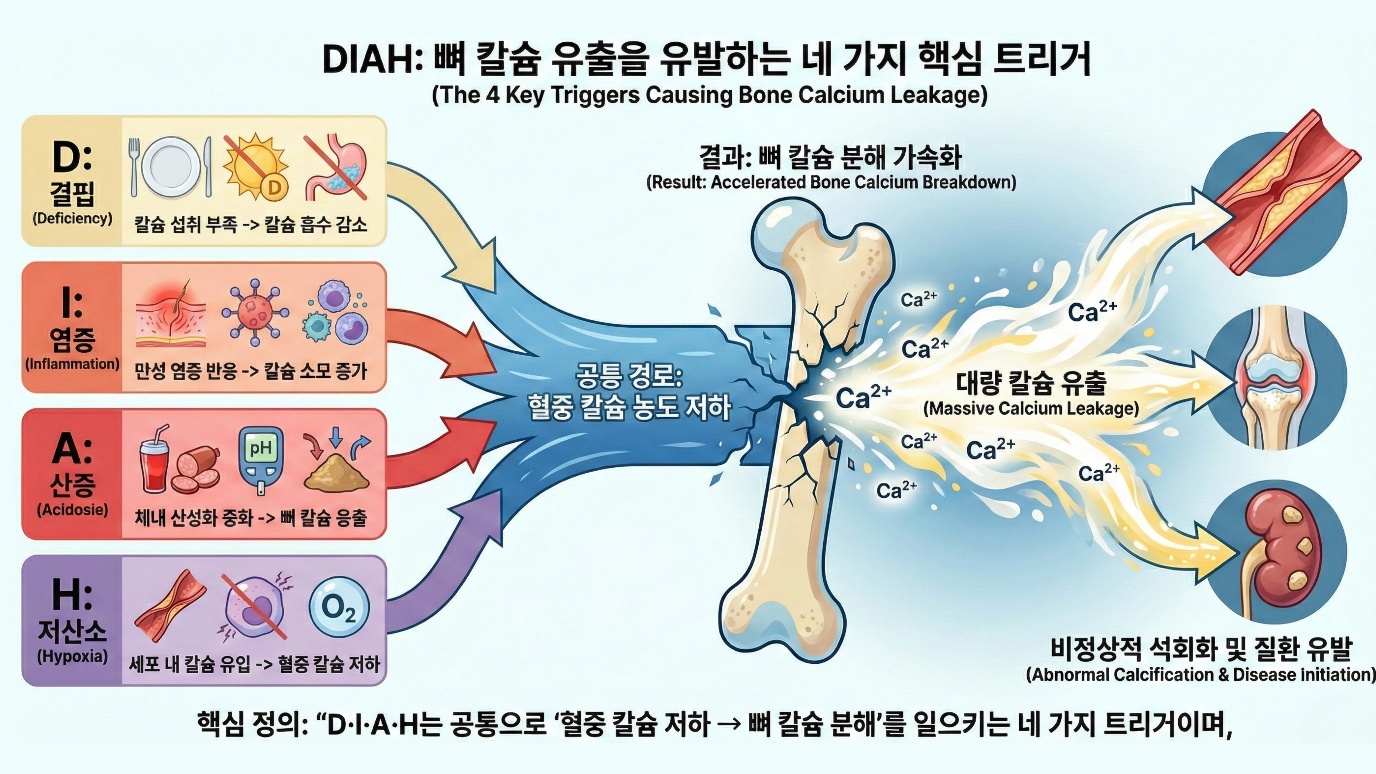
In birth and the growth period, calcium is saved into the bones. In the reproductive period, along with calcium, superior genes are passed to the next generation and reinforced and maintained. But once aging begins, this flow reverses. The life-threatening situations of DIAH (Deficiency, Inflammation, Acidosis, Hypoxia) pull the trigger, and for the sake of survival and reproduction the body takes calcium, the emergency medicine, out of the bones, the emergency medicine cabinet, to put out the urgent fire. It makes the heart beat, drives the nerves, and neutralizes acid.
The problem is what comes next. The calcium taken out repeatedly fails to return to its place and deposits in blood vessels, joints, and organs, becoming calcification. The emergency medicine drawn out for survival returns in the end as the poison of aftereffects.
The Grand Integration: The DIAH-7M Aging and Chronic Disease Pathway System, the Calcium Execution Code Theory
The DIAH-7M Aging and Chronic Disease Pathway System, the Calcium Execution Code theory, is a theory that interprets the cycle and evolution of life, birth, growth, reproduction, decline, death, and return, both macroscopically and microscopically, and integrates them into a single system.
Macroscopic Interpretation
Darwin's theory of evolution revealed why life changes. It is the principle of natural selection, that the individual fit for its environment survives and reproduces. The Human Genome Map decoded what life is designed with. It is the genetic information held in 3 billion base pairs. But between these two there was a blank. Having a blueprint does not make the heart beat on its own. Having natural selection does not make a cell divide on its own. "How does design become a working body?": this is the blank.
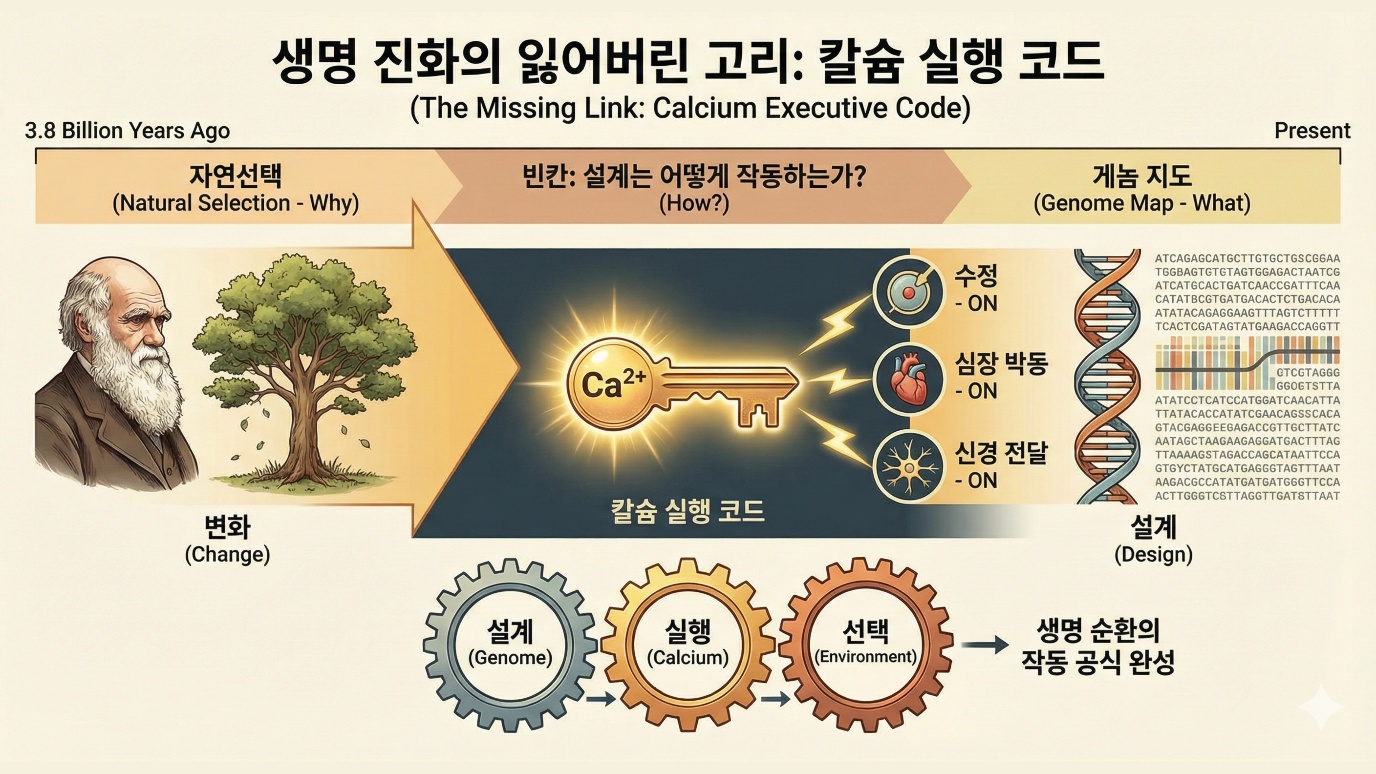
The Calcium Execution Code theory fills that blank with calcium. Why calcium? Calcium's concentration difference between the inside and outside of the cell reaches ten thousand-fold. Thanks to this extreme gradient, the moment the gate opens it becomes an explosive signal. Moreover, calcium is a structural material in the form of bone and a signaling substance at the same time. Evolution selected this efficient dual function. At the moment of fertilization when sperm meets egg, calcium rushes in and life begins. Heartbeat, neurotransmitter release, insulin secretion, muscle contraction, immune response, and even cell death: at every moment a cell must make a decision, the calcium signal switches on and off. Calcium is not the cause of every phenomenon but the common switch that activates the moment of decision. If genes are the blueprint of "what to make," calcium is the signal of "execute now." Here the execution code is not a code that holds information. It is a universal trigger signal that activates, right now, the design and circuits and enzyme systems that already exist, and that is why calcium is the execution code.
Once the blank is filled, the connection is completed. Design (genome) becomes a working body through execution (calcium), and that body proceeds through evolution as it meets selection (environment). Design, execution, and selection: as these three loops connect, Darwin and the genome are integrated into one. This is the operating formula of the 3.8-billion-year cycle of life. At last, from birth to return, cycle and evolution, the whole process of life is connected into one.
Microscopic Interpretation
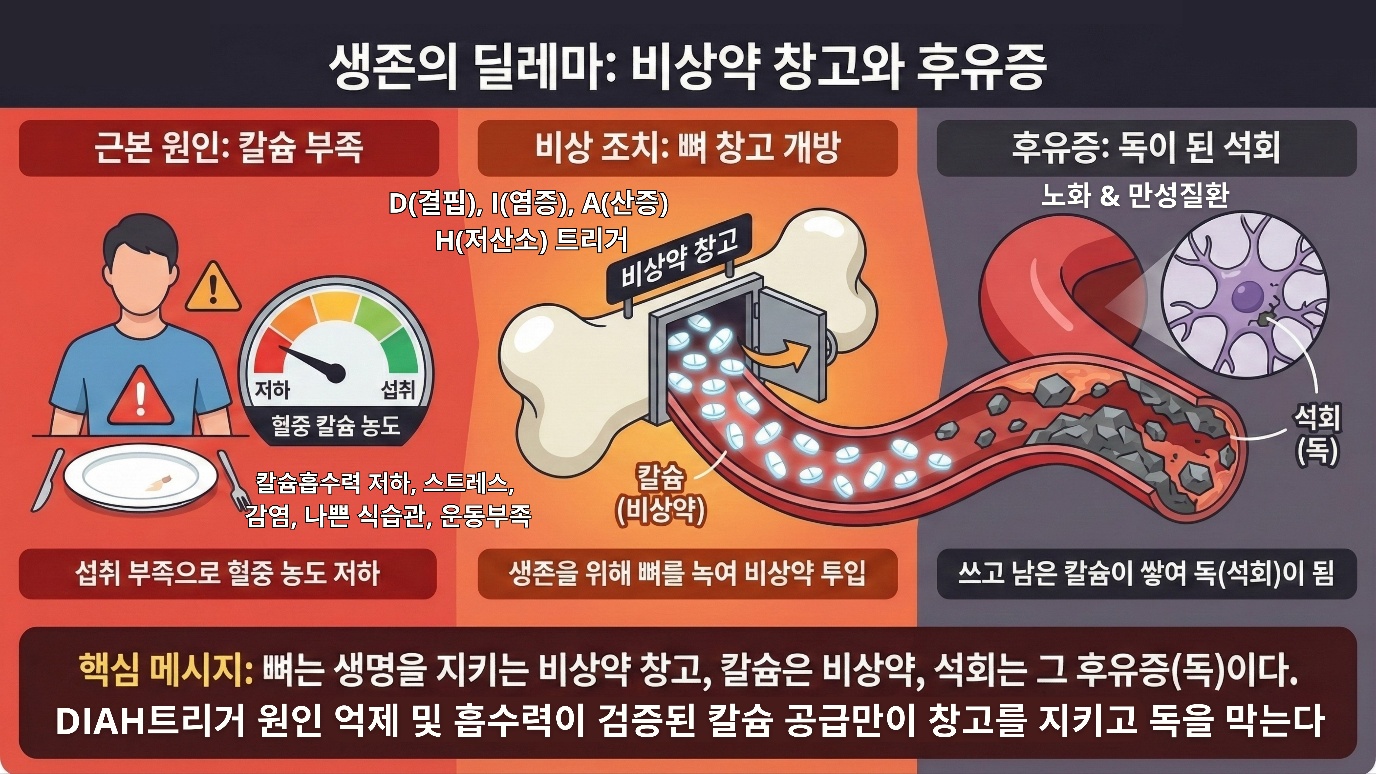
The Aging and Chronic Disease Pathway System is an integrated frame that gathers the fragments of medical research that had been scattered by department and completes them into a single puzzle.
In birth and the growth period, calcium is saved into the bones. In the reproductive period, along with calcium, superior genes are passed to the next generation and reinforced and maintained. But once decline begins, this flow reverses.
What hastens decline? A drop in calcium absorption, stress, inflammation, poor eating habits, lack of exercise, environmental pollution: these create DIAH (Deficiency, Inflammation, Acidosis, Hypoxia). DIAH is not fate but a trigger made by lifestyle. All four of these shake the homeostasis of blood and tissue, and as a result they shake calcium homeostasis as well. At this point the bone is mobilized as a buffer and an emergency warehouse. For the sake of survival the body draws out the emergency medicine, calcium, from the bones. But when the calcium drawn out repeatedly fails to return to its place and becomes calcification piling up throughout the body, the emergency medicine for survival returns as the poison of aftereffects.
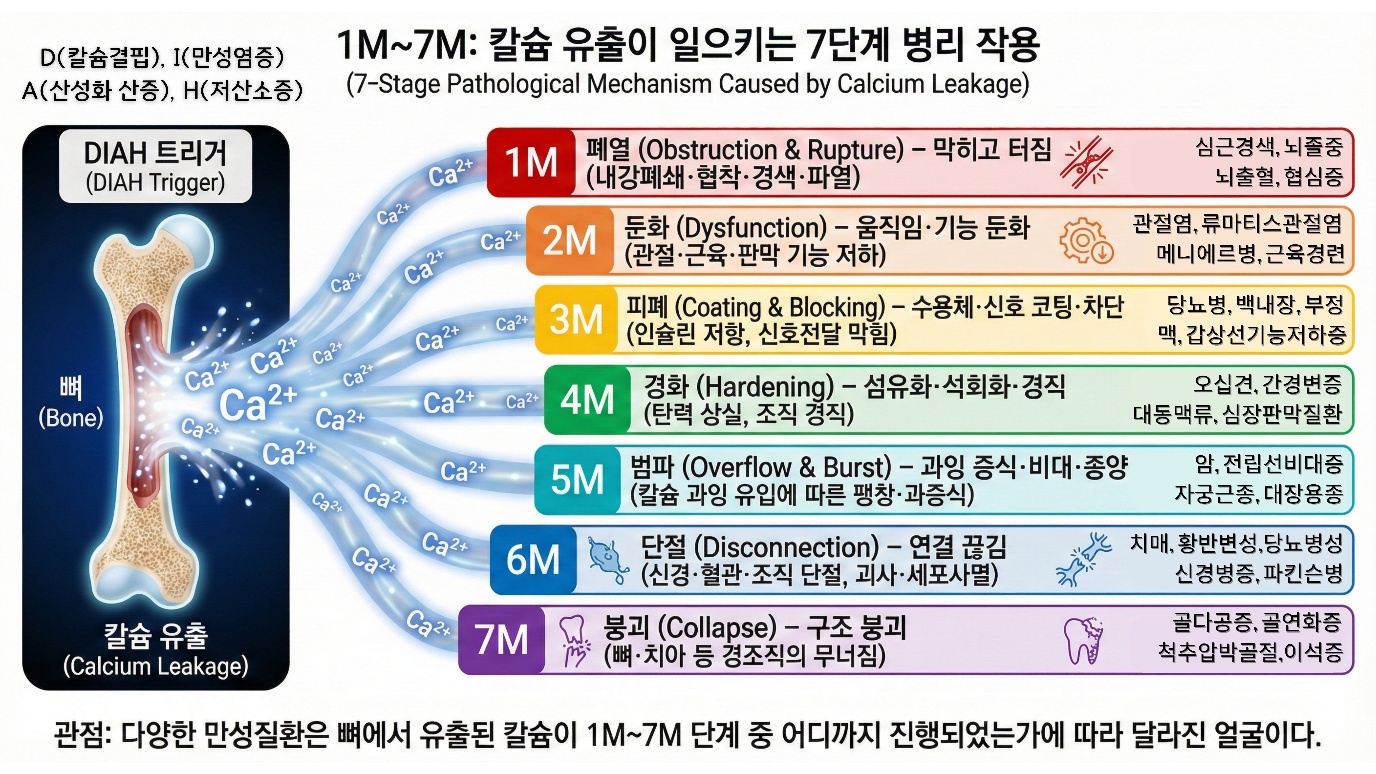
The seven pathological mechanisms produced by this calcification piled up throughout the body are 7M (Seven Mechanisms). 1M Obstruction & Rupture (it blocks and bursts): myocardial infarction, stroke, pulmonary embolism. 2M Dysfunction (it grows dull): degenerative arthritis, valvular disease. 3M Coating & Blocking (it is coated and blocked): diabetes, insulin resistance, hormonal imbalance. 4M Hardening (it hardens): arteriosclerosis, cirrhosis of the liver. 5M Overflow & Burst (it overflows and bursts): benign tumors, cancer. 6M Disconnection (it is cut and severed): peripheral neuropathy, tissue necrosis. 7M Collapse (it falls apart): osteoporotic fracture, periodontal disease, tooth loss. This is the substance of the decline and death of life.
But here there is hope. If the flow is corrected at the DIAH stage, the road to 7M can be blocked. If the factors are stopped before the DIAH (calcium deficiency, inflammation, acidosis, hypoxia) triggers draw calcium out of the bones, decline is delayed and healthy life is extended. This is the road to a long life free of disease, and it is the future that the DIAH-7M Aging and Chronic Disease Pathway System, the Calcium Execution Code theory, presents.
And after death, the calcium remaining in the bones and calcification of the skeletal remains returns to the soil and becomes the material of the next life. This is return. This is the common pathway of chronic disease, which lucidly unravels the cycle of life, birth, growth, reproduction, decline, death, and return, through the flow of calcium.
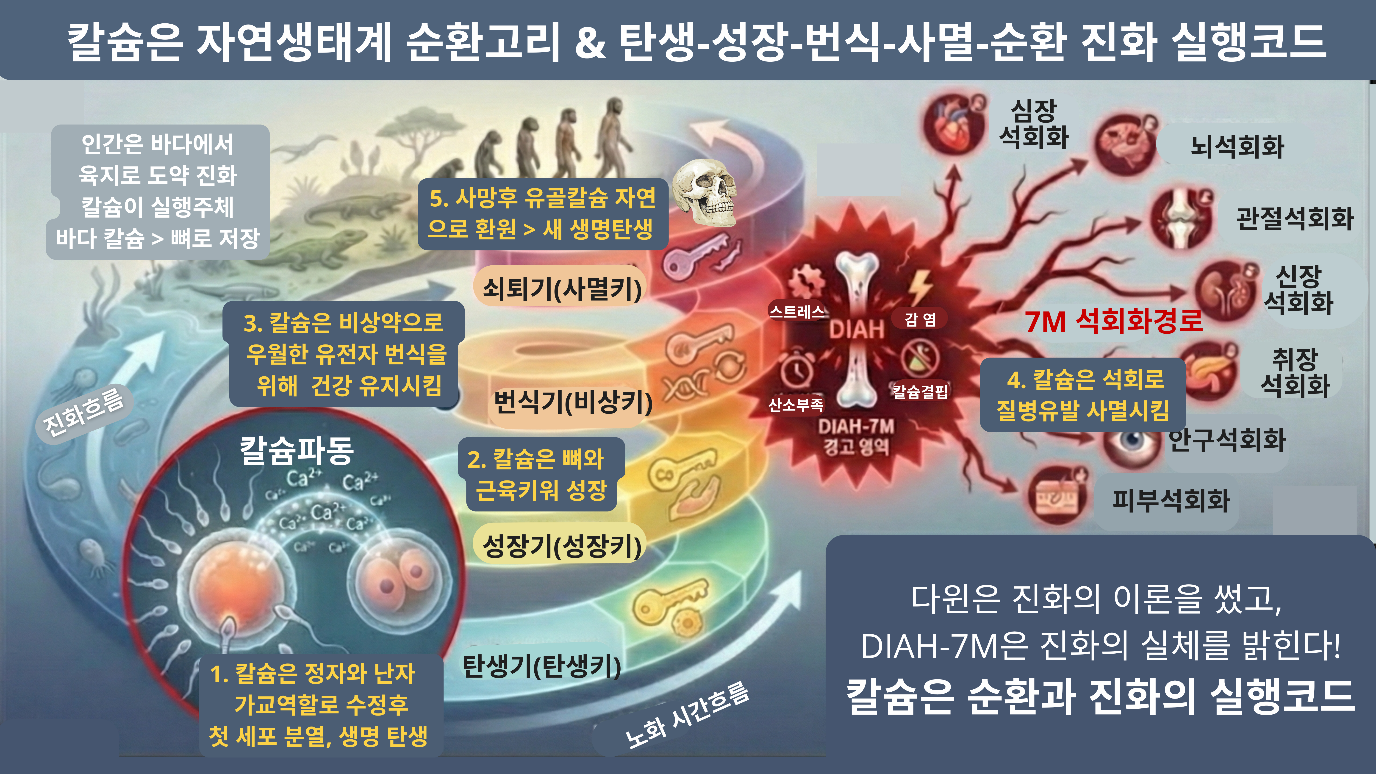
The Grand Integration
The grand integration weaves these two interpretations into one. If the macroscopic interpretation filled the blank of "how it is executed" that Darwin's theory of evolution and the Human Genome Project could not explain, the microscopic interpretation gathered the fragments of medical research scattered by department and completed them into a single puzzle, the common pathway of aging and chronic disease.
And these two interpretations connect to each other around the substance calcium. In the great cosmos we read why and how life cycles and evolves, and in the small cosmos we read where and how that cycle breaks down. One theory, two interpretations, a complete map.
After reading this book the reader will gain four things. First, an understanding of the cycle and evolution of life, birth, growth, reproduction, decline, death, and return. Why we hurt, why we age, why we die: the reader will gain the eye to accept the natural order of birth, aging, illness, and death. Second, an understanding of why chronic diseases do not come separately but come together. Third, the ability to check for oneself which causes are pulling the calcium efflux trigger in one's body, and whether that calcium is piling up as calcification in the blood vessels and throughout the body. Fourth, in place of memorizing the names of diseases, the eye to read the pathway of disease. The body that unfolds from here on is a journey that opens that eye, one chapter at a time.